
Building families is at the heart of care at Thaaimai Hospital in Alwarpet, Chennai. Whether you are just starting to explore a female infertility condition in Alwarpet or already know your diagnosis, Dr. Kanimozhi and her team support women through every step, in a calm and confidential setting close to home.
Understanding Female Infertility Condition in Alwarpet
What Is Female Infertility?
Female infertility means a woman has not been able to become pregnant after trying for one year with regular, unprotected intercourse. For women above 35 years, doctors usually recommend seeking help after six months of trying. It can happen at any stage of a woman’s reproductive life and does not always mean something is seriously wrong. Many women who are diagnosed with a female infertility condition in Alwarpet go on to conceive once the right cause is found and treated.
When Is Infertility Considered a Medical Condition?
Infertility becomes a medical condition when a clear pattern of difficulty conceiving continues beyond the expected time frame. Doctors look at menstrual history, past pregnancies, and any known health issues before deciding it needs treatment. A single missed cycle or one difficult month is not usually a sign of infertility. Once the pattern repeats or other symptoms appear, a proper fertility check-up helps confirm what is happening inside the body.
Common Female Infertility Conditions
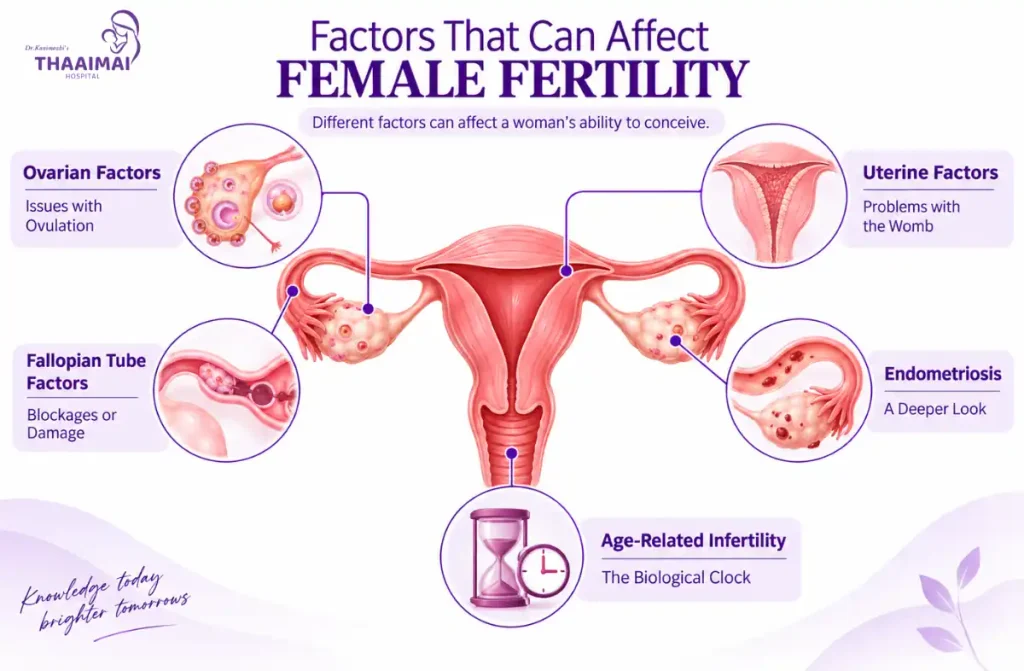
Several conditions can affect a woman’s ability to conceive naturally, and together they make up the wider picture of a female infertility condition in Alwarpet. These include ovulation disorders, polycystic ovary syndrome (PCOS), endometriosis, blocked fallopian tubes, and uterine fibroids. Age also plays a role, as fertility naturally declines over time. Each of these is explained in more detail in the next section, along with how it is usually identified and managed.
Common Causes of Female Infertility
Ovulation Disorders
Ovulation disorders happen when the ovaries do not release an egg regularly or at all. This can be caused by hormone imbalances, thyroid problems, or stress on the body. Women with ovulation disorders often notice unpredictable period dates or cycles that are much longer or shorter than usual. Blood tests and ultrasound scans can confirm whether ovulation is happening as expected, which guides the treatment plan.
Polycystic Ovary Syndrome (PCOS)
PCOS is one of the most common reasons women struggle to conceive. It happens when the ovaries produce higher levels of certain hormones, which can stop eggs from maturing and releasing properly. Women with PCOS may also notice weight changes, acne, or extra hair growth alongside irregular periods. With the right combination of lifestyle changes and medical support, many women with PCOS go on to have successful pregnancies.
Endometriosis
Endometriosis occurs when tissue similar to the uterine lining grows outside the uterus, often on the ovaries or fallopian tubes. This tissue can cause inflammation and scarring that make it harder for an egg and sperm to meet. Pain during periods or during intercourse is a common sign, though some women have no obvious symptoms at all. A pelvic ultrasound or laparoscopy is often used to confirm the diagnosis and plan the right treatment.
Blocked or Damaged Fallopian Tubes
The fallopian tubes carry the egg from the ovary to the uterus, so any blockage can prevent natural conception. Past pelvic infections, surgeries, or endometriosis are common reasons tubes become blocked or scarred. Many women with this condition have no symptoms and only discover it during a fertility work-up. A simple imaging test can check whether the tubes are open and working as they should.
Uterine Fibroids and Other Uterine Conditions
Fibroids are non-cancerous growths in or around the uterus that can sometimes affect implantation or the shape of the uterine cavity. Not all fibroids cause fertility problems, and their impact depends on their size and location. Other uterine conditions, such as polyps or a uterine septum, can also play a role. An ultrasound or hysteroscopy helps doctors see exactly what is happening inside the uterus.
Age-Related Decline in Fertility
A woman’s egg count and egg quality naturally reduce as she gets older, particularly after the age of 35. This is a normal part of the reproductive timeline and not a sign of poor health. Many women in their late 30s and early 40s still conceive successfully, often with some extra support from a fertility specialist. Understanding this timeline early helps couples make informed decisions about when to seek an evaluation.
Symptoms and Signs of Female Infertility
Irregular or Absent Menstrual Cycles
A menstrual cycle that is consistently shorter than 21 days or longer than 35 days can be a sign that ovulation is not happening regularly. Some women may notice their periods stop altogether for several months. These changes are worth mentioning to a doctor, especially if they continue for more than two or three cycles. Tracking period dates in a simple diary or app can help the doctor understand the pattern faster.
Painful Periods or Pelvic Pain
Cramping during periods is common, but pain that is severe enough to disrupt daily activities is worth checking. Pelvic pain that occurs outside of periods, or pain during intercourse, can also point to an underlying condition such as endometriosis or fibroids. Keeping note of when the pain happens and how strong it feels gives useful information for diagnosis. This kind of pain is worth discussing rather than managing alone.
Hormonal Imbalances and Ovulation Problems
Hormonal imbalances can show up as changes in skin, hair growth, weight, or mood alongside irregular cycles. These signs often mean the hormones that control ovulation are not working in the usual rhythm. A simple blood test at the right point in the cycle can measure these hormone levels accurately. Correcting the imbalance is often the first and most effective step toward regular ovulation.
When Should You Consult a Fertility Specialist?
- You have been trying to conceive for over a year (or six months if you are above 35)
- Your periods are irregular, very heavy, or have stopped
- You experience ongoing pelvic pain or pain during intercourse
- You have a known condition such as PCOS, endometriosis, or fibroids
- You have had two or more miscarriages
Speaking with a specialist early gives more time and options to understand what is happening and plan the right next steps.
Diagnosis of Female Infertility in Alwarpet
At Thaaimai Hospital, diagnosing a female infertility condition in Alwarpet begins with a detailed conversation and a set of focused tests. This step-by-step approach helps the team understand the exact cause before recommending any treatment.
Medical History and Fertility Assessment
The first visit usually involves a detailed discussion about menstrual history, past pregnancies, surgeries, and any family history of fertility issues. The doctor may also ask about lifestyle factors such as diet, sleep, and stress levels. This conversation helps build a complete picture before any tests are ordered. Being open about symptoms and concerns during this visit helps the doctor plan the most useful next steps.
Hormonal and Blood Tests
Blood tests measure hormones that control ovulation, thyroid function, and ovarian reserve. These are usually done on specific days of the menstrual cycle for accurate results. The results help the doctor understand whether ovulation is happening normally and whether any hormone levels need correction. This information also guides which fertility treatment, if any, is likely to work best.
Ultrasound and Follicular Monitoring
An ultrasound scan lets the doctor see the ovaries, uterus, and any fibroids or cysts that may be present. Follicular monitoring involves a series of scans across the cycle to track how an egg develops and when it is released. This helps confirm whether ovulation is happening on schedule. It is a painless, non-invasive way to gather detailed information about reproductive health.
Tests for Fallopian Tube and Uterine Health
A test called hysterosalpingography, or a similar imaging procedure, checks whether the fallopian tubes are open and whether the uterine cavity has a normal shape. This helps rule out blockages or structural issues that could prevent pregnancy. In some cases, a hysteroscopy allows the doctor to look inside the uterus directly. These tests together give a clear picture of whether the reproductive structures are working as expected.
Treatment Options for Female Infertility
Lifestyle Changes and Ovulation Tracking
- Eating a balanced diet with enough protein, iron, and folic acid
- Maintaining a healthy body weight through regular activity
- Reducing caffeine and avoiding smoking or alcohol
- Managing stress through sleep, rest, and relaxation practices
- Tracking ovulation using cycle apps or basal body temperature
These changes often support the body’s natural fertility and work well alongside any medical treatment recommended by the doctor.
Medicines for Ovulation Induction
When ovulation is irregular, certain medicines can help stimulate the ovaries to release an egg on a more predictable schedule. These medicines are usually taken for a few days early in the cycle, with the response tracked through ultrasound. The dosage is adjusted based on how the body responds, which helps reduce unnecessary side effects. Many women conceive naturally once regular ovulation is restored through this approach.
Intrauterine Insemination (IUI)
IUI is a procedure where prepared sperm is placed directly into the uterus around the time of ovulation. It is often recommended for mild ovulation issues or when the exact cause of infertility is unclear. The procedure itself is quick and does not usually require anaesthesia. It is generally tried before moving to more advanced treatment options.
In Vitro Fertilization (IVF)
IVF involves collecting eggs from the ovaries and combining them with sperm in a laboratory before transferring a developing embryo into the uterus. It is recommended when other treatments have not worked or when conditions such as blocked tubes make natural conception difficult. Each step of the IVF process, from egg collection to embryo transfer, is carefully monitored. Advances in laboratory techniques have made IVF a well-established option for many types of fertility challenges.
Surgery for Certain Fertility Conditions
Some conditions, such as large fibroids, ovarian cysts, or significant scar tissue from endometriosis, may need to be treated surgically before fertility improves. Many of these procedures are done using minimally invasive techniques like laparoscopy or hysteroscopy, which allow for a quicker recovery. Surgery is usually considered only when it is likely to meaningfully improve the chances of conception. The decision is made carefully, based on each woman’s specific situation and test results.
Choosing a Female Infertility Specialist in Alwarpet
Choosing the right team matters as much as the treatment itself. Women exploring a female infertility condition in Alwarpet benefit from a specialist who listens closely and explains each step clearly.
What to Look for in a Fertility Clinic
- Doctors with specific training and experience in reproductive medicine
- A laboratory equipped for hormone testing and ultrasound monitoring
- Clear communication about test results and treatment options
- A calm, private setting for consultations and procedures
- Support staff who are approachable and easy to reach with questions
A clinic that combines these qualities makes the fertility journey feel more manageable from the very first visit.
Importance of Personalized Fertility Treatment
Every woman’s body responds differently, so a treatment plan built around one person’s specific test results tends to work better than a generic approach. Personalized care takes into account age, hormone levels, past health history, and personal preferences. This also means the plan can be adjusted as new information comes in during treatment. A tailored approach reduces unnecessary steps and keeps the focus on what is most likely to help.
Questions to Ask Your Fertility Specialist
It helps to ask what tests are planned and why, along with what each result might mean for the next step. Understanding the expected timeline, success rates for a specific condition, and what a treatment cycle involves day to day can ease uncertainty. It is also reasonable to ask about costs and what support is available if a first attempt does not succeed. A good specialist welcomes these questions and answers them clearly and patiently.
How Female Infertility Treatment in Alwarpet Can Help
Female infertility treatment in Alwarpet at Thaaimai Hospital is built around clear diagnosis, personal attention, and steady support from the first consultation onward.
Individualized Diagnosis and Treatment Planning
Each woman’s evaluation starts with her own medical history and test results, not a standard checklist. The team reviews hormone levels, scan findings, and any previous treatment history before suggesting next steps. This helps avoid unnecessary tests or treatments that are unlikely to help. The plan is explained clearly so the woman and her partner understand exactly what to expect.
Advanced Fertility Evaluation
Detailed hormonal testing, ultrasound monitoring, and imaging tests are used together to build a full picture of reproductive health. This thorough evaluation helps identify even conditions that do not cause obvious symptoms. Having access to this range of testing under one roof also makes the process more convenient. Accurate evaluation early on often shortens the overall path to a treatment that works.
Follow-Up and Fertility Support
Fertility care does not end after one consultation or one test. Regular follow-up visits track how the body is responding to treatment and allow the plan to be adjusted if needed. Emotional support and clear communication are part of this ongoing care, since the fertility journey can feel long at times. Continued support helps women feel informed and cared for at every stage.
Conclusion
A female infertility condition in Alwarpet does not have to mean the end of the journey toward parenthood. With early evaluation, an accurate diagnosis, and a treatment plan built around each woman’s own body and history, most fertility challenges can be understood and addressed effectively. At Thaaimai Hospital, Dr. Kanimozhi and her team guide women through every step, from the first consultation to ongoing support, in a calm and confidential setting close to home. If you have noticed irregular cycles, ongoing pelvic pain, or have been trying to conceive without success, reaching out early gives you more time, more options, and more clarity on the path ahead.