
Foods that increase female fertility include leafy greens, fatty fish, whole grains, beans, nuts, and antioxidant-rich fruits like berries and pomegranate. These foods provide key nutrients such as folate, omega-3 fatty acids, iron, zinc, and antioxidants, which support hormone balance, egg quality, and healthy ovulation. Along with a balanced diet, they may help the body prepare for a healthy pregnancy over time.
How Diet Can Support Female Fertility
What you eat every day plays a real role in your reproductive health. Small, steady changes to your meals can support hormone balance, egg quality, and a healthy cycle over time. This does not mean one meal or one food will change everything overnight. It means that a pattern of good choices, kept up over weeks and months, gives your body the building blocks it needs.
Many women who are planning a pregnancy start by looking closely at their plate. A diet built around whole foods, healthy fats, and steady blood sugar can make a noticeable difference to how your body prepares for conception. This guide looks at foods that increase female fertility, the nutrients behind them, and simple meal ideas you can start using this week.
Nutrients Important for Reproductive Health
Before looking at specific foods, it helps to know which nutrients your reproductive system depends on most. These nutrients support egg development, hormone production, and a healthy uterine lining.
- Folate, for healthy cell growth and early development
- Omega-3 fatty acids, for hormone balance and blood flow
- Iron, for healthy ovulation and energy
- Antioxidants, for protecting egg quality
- Vitamin D, for hormone regulation
- Zinc, for supporting the menstrual cycle
The food sections below show you where to find each of these nutrients in everyday meals.
Best Foods That May Support Female Fertility
The foods below are commonly recommended by nutrition experts for women who are trying to conceive. Adding a mix of these to your weekly meals is an easy way to work more fertility-supportive nutrients into your day.
Leafy Green Vegetables
Spinach, methi leaves, and other leafy greens are rich in folate, a nutrient your body needs before and during early pregnancy. They also carry iron, which supports healthy ovulation and helps prevent tiredness during your cycle. A simple way to add them is to stir a handful into dal, sambar, or a morning omelette. Eating leafy greens a few times a week is an easy habit that fits into most South Indian meals without much extra effort.
Berries and Other Antioxidant-Rich Fruits
Berries, pomegranate, and papaya are packed with antioxidants, which help protect your eggs from everyday cell stress. These fruits also add natural sweetness to your diet without the sugar spikes that come from processed snacks. Pomegranate is especially popular in Chennai kitchens and is easy to add to breakfast or as a mid-morning snack. Eating a variety of colourful fruits through the week gives you a wider range of protective plant compounds.
Avocados
Avocados are rich in healthy monounsaturated fat, which supports hormone production. They also carry vitamin E and folate, two nutrients that work together to support reproductive health. Avocados are becoming easier to find in Chennai markets and can be added to salads, toast, or a simple chutney. A few slices two or three times a week is a good place to start.
Nuts and Seeds
Almonds, walnuts, flaxseeds, and pumpkin seeds provide healthy fats, zinc, and plant-based omega-3s. A small daily handful is an easy habit to build, whether eaten on their own or added to curd, porridge, or salads. Walnuts in particular are a good plant source of omega-3 fatty acids, which support hormone balance. Keeping a small jar of mixed nuts at your desk or in the kitchen makes this an easy daily habit.
Fatty Fish
Fish such as sardines, mackerel, and salmon are among the best food sources of omega-3 fatty acids. These fats support hormone balance and healthy blood flow to the reproductive organs. Sardines and mackerel are widely available and affordable in Chennai, making them a practical choice for regular meals. Aiming for fatty fish two times a week is a realistic target for most households.
Whole Grains
Brown rice, whole wheat, millets like ragi and jowar, and oats release energy slowly, which helps keep blood sugar steady. Steady blood sugar is linked to more regular ovulation, since sharp sugar swings can affect hormone signals. Swapping polished white rice for millets or brown rice a few times a week is a simple, low-effort change. Millets are also naturally available across Tamil Nadu and fit easily into everyday cooking.
Beans and Lentils
Beans, chickpeas, and lentils are excellent plant sources of protein, iron, and folate, all of which support reproductive health. They are also naturally rich in fibre, which supports steady digestion and hormone balance. Dal, sundal, and chickpea curry are everyday dishes that already bring these benefits to your table. Including a bean or lentil dish most days is an easy and affordable way to support your diet.
Eggs
Eggs are a complete source of protein and also provide choline, a nutrient that supports cell development. The yolk carries most of the nutrients, including vitamin D and B12, so it is worth including the whole egg rather than just the white. Eggs are quick to prepare and work well at breakfast, as a snack, or added to a simple curry. A few eggs a week can be a useful addition for women looking to increase their protein intake.
Full-Fat Dairy
Some research suggests that full-fat dairy, such as whole milk, curd, and paneer, may support ovulatory health better than low-fat versions. Dairy also provides calcium and vitamin D, both important for hormone function. A daily serving of curd or a glass of milk is an easy way to include this food group. As with any food, moderation is best, and it is worth choosing what feels comfortable for your body.
Citrus Fruits
Oranges, lemons, and sweet lime are rich in vitamin C, an antioxidant that supports egg health and helps your body absorb iron from plant foods. Adding a squeeze of lemon to your dal or vegetables is a simple way to boost iron absorption at the same meal. A piece of citrus fruit as a snack is also an easy habit to build. These fruits are widely available and fit naturally into most diets.
Sweet Potatoes
Sweet potatoes are rich in beta-carotene, which your body converts into vitamin A, a nutrient that supports hormone production. They also provide steady, slow-release energy and fibre, which helps keep blood sugar stable. Roasted, boiled, or added to a curry, sweet potatoes are a simple swap for regular potatoes a few times a week. This small change can add useful nutrients without changing your meal much at all.
Lean Protein Sources
Chicken, fish, eggs, and plant proteins like lentils and paneer all support steady blood sugar and provide the building blocks your body needs for hormone production. Protein at each meal also helps you feel fuller for longer, which supports more balanced eating through the day. Choosing a mix of lean protein sources across the week, rather than relying on one type, gives you a wider range of nutrients. This variety is easy to build into typical Tamil Nadu meals.
Key Nutrients for Female Fertility
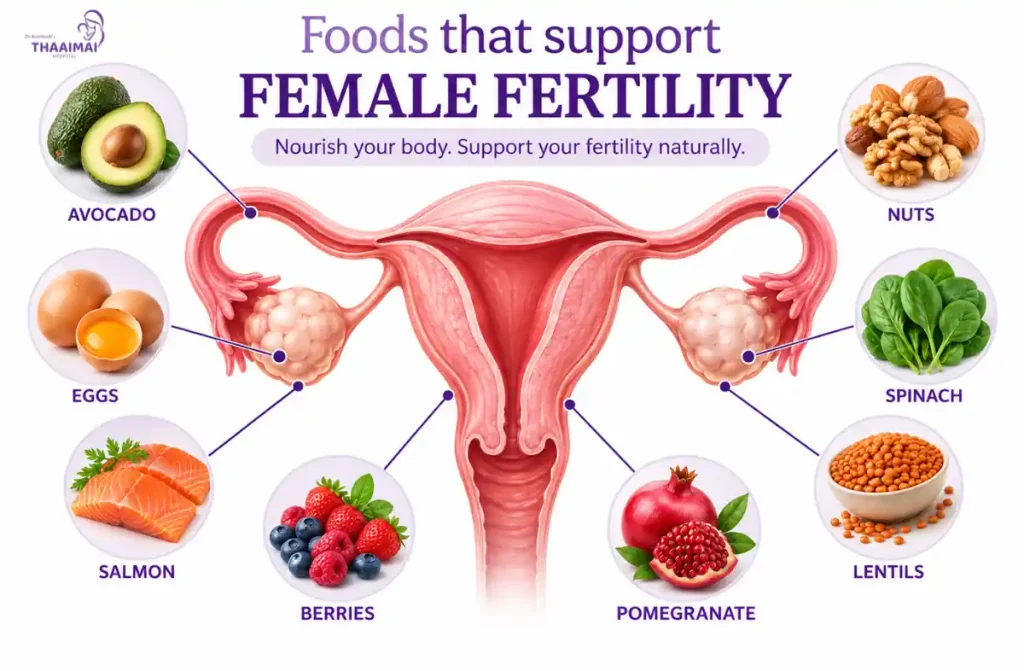
Here is a closer look at the specific nutrients that support female fertility and where you can find them in your food.
Folate
Folate supports healthy cell division and is especially important in the weeks before and after conception. It is found in leafy greens, lentils, and beans, all of which are common in South Indian cooking. Getting enough folate from food, alongside any supplement your doctor recommends, gives your body a strong foundation. Cooking vegetables lightly rather than overcooking helps preserve more of the folate in your food.
Omega-3 Fatty Acids
Omega-3 fats support hormone balance and healthy blood flow to the reproductive organs. Fatty fish like sardines and mackerel are the richest sources, while walnuts and flaxseeds offer a plant-based option. Including one of these sources a few times a week is a realistic and affordable goal for most households. Omega-3s also support overall heart and brain health, so this is a change that benefits your whole body.
Iron
Iron supports healthy ovulation, and low iron levels have been linked to irregular cycles in some women. Leafy greens, lentils, and lean meats are good sources, and pairing them with vitamin C-rich foods like lemon or citrus helps your body absorb more iron. Iron needs can vary from person to person, so it is worth discussing your levels with your doctor. A simple blood test can show whether your iron intake needs extra attention.
Antioxidants
Antioxidants help protect eggs from everyday cell stress that naturally builds up over time. Berries, pomegranate, nuts, and colourful vegetables are all good sources of antioxidants. Eating a wide variety of colourful fruits and vegetables each week is a simple way to get a broad mix of these protective compounds. This is one of the easiest dietary habits to build, since it fits naturally into most meals.
Vitamin D
Vitamin D plays a role in hormone regulation and has been linked to healthy ovulation in research studies. Sunlight is a natural source, and food sources include egg yolks, fatty fish, and fortified dairy. Many people have lower vitamin D levels than they realise, so a simple blood test can help you understand where you stand. Spending a little time outdoors each day, along with these food choices, supports healthy levels.
Vitamin E
Vitamin E is an antioxidant that supports the lining of the uterus and helps protect cells from damage. Nuts, seeds, and avocados are good everyday sources of this nutrient. Adding a small handful of almonds or sunflower seeds to your day is an easy way to include more vitamin E. This nutrient works well alongside vitamin C and other antioxidants for a broader protective effect.
Zinc
Zinc supports the menstrual cycle and plays a role in egg development. Pumpkin seeds, chickpeas, and lean meats are good sources of this mineral. Including a mix of these foods through the week is an easy way to meet your needs. Zinc also supports your immune system, so this is a nutrient worth paying attention to overall.
Protein and Healthy Fats
Protein and healthy fats work together to support steady hormone production and stable blood sugar. Eggs, lentils, fish, nuts, and avocado are all good sources that fit easily into everyday Tamil Nadu meals. Building a plate with a source of protein and a source of healthy fat at each meal is a simple guideline to follow. This approach also helps keep you feeling fuller and more energised through the day.
Foods to Avoid or Limit When Trying to Conceive
Alongside adding fertility-supportive foods, it also helps to limit a few food groups that can work against your goals.
- Highly processed foods, such as packaged snacks and instant meals, which are often low in nutrients
- Foods high in added sugar, including sweets, sugary drinks, and desserts
- Trans fats, found in some fried and packaged bakery items
- Excessive alcohol, which can affect hormone balance
- High-mercury fish, such as king fish in large amounts, which is best kept occasional
- Too much caffeine, meaning more than one or two cups of coffee or tea a day
Highly Processed Foods
Packaged snacks, instant noodles, and ready-to-eat meals are often low in fibre, vitamins, and minerals compared to home-cooked food. They can also cause quicker rises in blood sugar, which may affect hormone signals over time. Choosing home-cooked meals most days, even simple ones, is a practical way to reduce your intake of these foods. Keeping a few easy, quick recipes on hand makes this change easier to stick to.
Foods High in Added Sugar
Sweets, sugary drinks, and packaged desserts can cause sharp rises and falls in blood sugar, which may affect ovulation over time. Cutting back does not mean giving up sweetness altogether, as fruit is a good natural alternative. Saving sugary treats for occasions rather than daily habits is a realistic and sustainable approach. Small, steady changes like this tend to last longer than strict, all-or-nothing rules.
Trans Fats
Trans fats are often found in fried snacks, bakery items, and some packaged foods, and they have been linked to poorer reproductive health in research. Reading ingredient labels for the words ‘partially hydrogenated oil’ can help you spot them. Choosing home-cooked fried foods occasionally, using fresh oil, is a better option than regularly buying packaged fried snacks. This is one of the easier changes to make once you know what to look for.
Excessive Alcohol
Drinking alcohol in large amounts can affect hormone balance and overall reproductive health. Many women choose to limit or avoid alcohol altogether while trying to conceive. If you do drink, keeping it occasional rather than regular is a sensible approach. Speaking with your doctor about what feels right for your situation is always a good next step.
High-Mercury Fish
Some large fish, such as king fish and shark, can carry higher levels of mercury, which is best limited when trying to conceive. Smaller fish like sardines and mackerel are lower in mercury and still provide the same helpful omega-3 fats. Choosing smaller, more affordable fish varieties most of the time is an easy way to manage this. This still allows you to enjoy the benefits of fish without the added concern.
Too Much Caffeine
High caffeine intake has been linked to changes in fertility in some studies, though moderate amounts appear generally fine for most women. Keeping your intake to about one or two cups of coffee or tea a day is a commonly recommended guideline. Herbal teas or decaffeinated options can be a good alternative if you are used to drinking more through the day. Small swaps like this are easy to make without feeling like a big sacrifice.
Fertility-Friendly Meal Ideas
Here are some simple, everyday meal ideas that bring together the foods and nutrients covered above.
- Breakfast: vegetable-stuffed dosa with a side of curd, or oats porridge topped with berries and a few walnuts
- Lunch: brown rice or millet with sambar, a leafy green vegetable side, and a small bowl of curd
- Dinner: grilled or curried fish with sauteed vegetables and a small serving of whole grains
- Snacks: a handful of mixed nuts, a piece of citrus fruit, or roasted chickpeas
Healthy Breakfast Ideas
A good fertility-friendly breakfast combines protein, fibre, and healthy fat to keep your blood sugar steady through the morning. Vegetable-stuffed dosa or idli with sambar and a side of curd is a familiar option that already fits this pattern well. Oats porridge with milk, berries, and a spoon of flaxseeds is another simple choice that is quick to prepare on busy mornings. Starting the day this way helps set a steady tone for the rest of your meals.
Fertility-Supportive Lunch Ideas
Lunch is a good opportunity to include whole grains, leafy greens, and a protein source together on one plate. Brown rice or millet with sambar, a vegetable poriyal, and a bowl of curd is an easy example that most households already know how to make. Adding a squeeze of lemon over your vegetables can help your body absorb more iron from the meal. Keeping lunch balanced this way supports steady energy through the afternoon.
Nutritious Dinner Ideas
A lighter dinner built around lean protein and vegetables is a good choice for the evening. Grilled or curried fish with sauteed greens and a small portion of whole grains covers several fertility-supportive nutrients in one meal. For vegetarian households, a lentil curry with vegetables and a small serving of millet works just as well. Keeping dinner simple and consistent is often easier to maintain than complicated recipes.
Healthy Snacks
Choosing the right snacks can help you meet your daily nutrient needs without much extra effort. A small handful of mixed nuts, a piece of fruit, or roasted chickpeas are all easy, portable options. These snacks also help avoid the blood sugar swings that come from packaged, sugary alternatives. Keeping a few of these options ready at home makes it easier to reach for them when you are hungry between meals.
Does Weight and Overall Diet Affect Female Fertility?
Diet does not work alone. A few related habits also play a part in supporting your overall reproductive health.
Maintaining a Healthy Weight
Being significantly underweight or overweight can affect hormone balance and ovulation for some women. A gradual, steady approach to reaching a healthy weight, through balanced meals and regular activity, tends to work better than quick or extreme changes. Your doctor can help you understand what a healthy range looks like for your own body. Small, consistent changes over time are usually more sustainable than sudden, drastic ones.
Eating a Balanced Diet
A balanced diet includes a mix of whole grains, protein, healthy fats, and plenty of fruits and vegetables at most meals. This kind of pattern, rather than any single superfood, is what research generally links to better reproductive health. Building your plate around variety, rather than restriction, makes healthy eating easier to maintain long term. Small, steady improvements to your usual meals often make the biggest difference over time.
Staying Hydrated
Good hydration supports healthy blood flow and helps your body carry nutrients to where they are needed. Drinking water through the day, rather than only when you feel thirsty, is a simple habit that supports overall health. Herbal teas and water-rich fruits like watermelon can also contribute to your daily fluid intake. Staying hydrated is an easy habit to build alongside the food choices covered above.
Conclusion
Foods that increase female fertility are not about one perfect meal or a strict diet plan. They are about steady, everyday choices, built around whole grains, leafy greens, healthy fats, and lean protein, that support your hormones and reproductive health over time.
If you would like personal guidance on diet and fertility, the team at Thaaimai Hospital is here to help. Thaaimai Hospital is easy to reach for patients across Chennai, with a welcoming, accessible facility for women at every stage of their fertility journey. You can find more details and get in touch through thaaimaihospital.com.