
Struggling to conceive can feel confusing when the cause isn’t obvious. In many couples, the reason lies with the male partner, and understanding male infertility conditions in Alwarpet is the first step toward finding real answers. This page walks you through what these conditions are, why they happen, and what can be done about them.
What Is Male Infertility?
Male infertility means a man’s reproductive system is having trouble producing, delivering, or maintaining healthy sperm needed for conception. It’s diagnosed when a couple hasn’t been able to conceive after a year of regular, unprotected intercourse, and testing points to a sperm or reproductive issue on the male side. This isn’t a rare problem — it plays a role in nearly half of all couples facing fertility challenges. The good news is that most causes can be identified with the right tests, and many are treatable with a clear plan from a fertility specialist.
Common Male Infertility Conditions
Some conditions affect sperm quantity, others affect sperm quality, and some involve physical or hormonal issues that block healthy sperm from reaching the egg. Understanding the different Male Infertility Conditions helps explain why they range from low sperm count and poor sperm movement to structural issues like varicocele or blockages in the reproductive tract. Hormonal imbalances and ejaculation problems can also stand in the way of natural conception. Each condition has its own set of causes and treatment options, which is why an accurate diagnosis matters so much before starting treatment.
Causes of Male Infertility
Several factors can affect a man’s fertility, sometimes on their own and sometimes together:
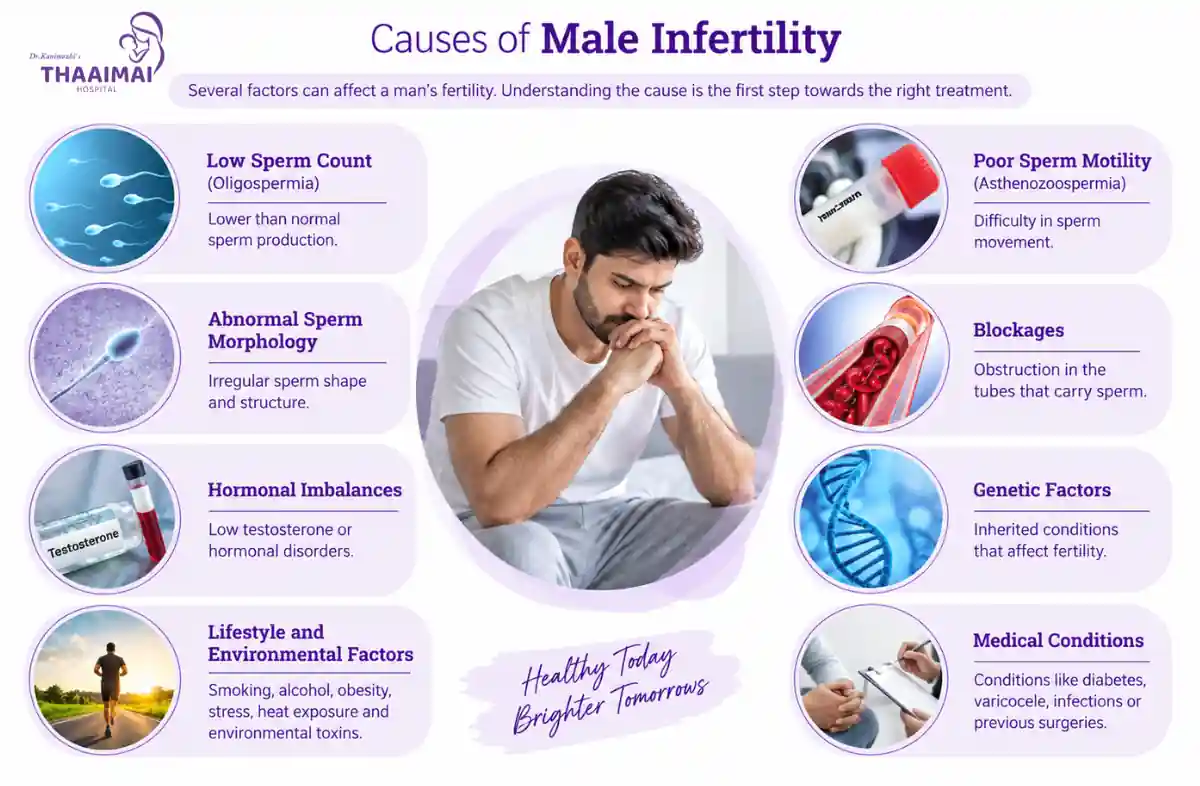
- Hormonal imbalances that reduce sperm production
- Infections that damage sperm or block their pathway
- Varicocele, or swollen veins in the scrotum
- Genetic conditions that affect sperm development
- Lifestyle factors like smoking, heavy drinking, or obesity
- Exposure to heat, toxins, or certain medications
- Previous surgeries or injuries to the reproductive organs
Symptoms and Warning Signs of Male Infertility
Male infertility doesn’t always come with obvious symptoms, which is why many men only find out during fertility testing. Still, some signs are worth paying attention to:
- Difficulty conceiving after a year of trying
- Changes in sexual desire or erectile function
- Pain, swelling, or a lump in the testicle area
- Smaller or firmer testicles than usual
- Reduced facial or body hair, a possible sign of hormonal imbalance
- Problems with ejaculation, such as low semen volume
Types of Male Infertility Conditions
Male infertility shows up in different forms, each affecting sperm or reproductive function in its own way. Knowing which type is involved helps guide the right treatment path.
Low Sperm Count (Oligospermia)
Oligospermia means the semen contains fewer sperm than what’s considered normal for natural conception. It can happen due to hormonal issues, infections, varicocele, or lifestyle habits like smoking and excess alcohol. Many men with this condition have no other symptoms and only discover it through a semen analysis. Treatment often starts with addressing the underlying cause, followed by lifestyle changes or medical support to improve sperm production. In some cases, assisted reproductive techniques help achieve pregnancy even with lower sperm counts.
No Sperm in Semen (Azoospermia)
Azoospermia is the complete absence of sperm in the ejaculate, and it affects a small percentage of men facing fertility issues. It’s grouped into two types: obstructive, where a blockage stops sperm from reaching the semen, and non-obstructive, where the testicles produce very little or no sperm. Causes range from prior infections and surgeries to genetic factors and hormonal problems. Diagnosis usually involves hormone tests, imaging, and sometimes a small tissue sample from the testicle. Depending on the type, treatment can involve surgery to clear a blockage or techniques to retrieve sperm directly for use in IVF or ICSI.
Poor Sperm Motility (Asthenozoospermia)
Asthenozoospermia refers to sperm that don’t move well enough to travel through the female reproductive tract and reach the egg. Even with a normal sperm count, poor motility is one of the Male Infertility Conditions that can make natural conception difficult. Common causes include infections, high scrotal temperature, smoking, and certain genetic factors. A semen analysis measures the percentage of actively moving sperm, which helps confirm the diagnosis. Treatment may involve treating an underlying infection, lifestyle adjustments, or using techniques like IUI or ICSI that don’t rely on sperm swimming unaided.
Abnormal Sperm Morphology (Teratozoospermia)
Teratozoospermia means a higher-than-normal percentage of sperm have an irregular shape, which can affect their ability to fertilise an egg naturally. This is usually picked up during a detailed semen analysis under a microscope. Causes can include genetic factors, infections, exposure to toxins, or prolonged heat exposure such as from hot tubs or tight clothing. Many men with this condition still father children naturally, especially if only a portion of sperm are affected. When natural conception is difficult, ICSI is often recommended since it allows a single healthy sperm to be selected and used for fertilisation.
Varicocele
A varicocele is an enlargement of the veins within the scrotum, similar to varicose veins elsewhere in the body. It’s one of the most common and treatable Male Infertility Conditions, as it can raise the temperature around the testicles and affect sperm production. Many men notice no symptoms at all, while others feel a dull ache or see visible swelling. It’s usually diagnosed through a physical exam and confirmed with a scrotal ultrasound. Surgical repair or a minimally invasive procedure often improves sperm count and motility over time.
Erectile Dysfunction
Erectile dysfunction is the ongoing difficulty in achieving or maintaining an erection firm enough for intercourse, which can directly affect a couple’s chances of natural conception. It can stem from physical causes like hormonal imbalance, diabetes, or blood flow issues, as well as stress or emotional factors. A doctor will usually review overall health, hormone levels, and lifestyle habits to identify the root cause. Treatment options range from medication and lifestyle changes to addressing underlying health conditions. With the right care, most men see meaningful improvement.
Hormonal Imbalances
Hormones like testosterone, FSH, and LH play a central role in sperm production, and an imbalance in any of them can reduce fertility. This can result from issues with the pituitary gland, thyroid, or testicles themselves. Signs may include low energy, reduced sex drive, or changes in body hair, though some men have no noticeable symptoms. A simple blood test can measure hormone levels and point to the source of the imbalance. Treatment is often straightforward, using medication to restore healthy hormone levels and support natural sperm production.
Ejaculation Disorders
Ejaculation disorders include conditions like premature ejaculation, delayed ejaculation, or retrograde ejaculation, where semen enters the bladder instead of exiting the body. These can make it physically difficult for sperm to reach the female reproductive tract during intercourse. Causes vary widely, from nerve damage and diabetes to certain medications or psychological factors. A detailed history and physical exam usually help identify the specific type and cause. Depending on the diagnosis, treatment may include medication, counselling, or sperm retrieval techniques combined with assisted reproduction.
Conclusion
Understanding male infertility conditions in Alwarpet gives couples a clearer path forward when conception isn’t happening as expected. Whether the cause is a low sperm count, poor sperm movement, varicocele, or a hormonal imbalance, most conditions can be diagnosed with straightforward tests and treated effectively with the right guidance. The key is not to wait too long before seeking help — early evaluation opens up more treatment options and better outcomes. With the right fertility specialist by your side, many couples go on to achieve a healthy pregnancy, even when male infertility is part of the picture.