
Many women wonder if what they’re feeling is simply stress or something more. The signs of infertility in women often include irregular periods, pelvic pain, hormonal imbalance, and difficulty conceiving after a year of trying. As a fertility specialist in Alwarpet, I help women recognize these symptoms early so treatment can begin sooner
About Dr. Kanimozhi — Fertility Specialist, Thaaimai Hospital, Alwarpet
Dr. Kanimozhi is a fertility specialist practicing at Thaaimai Hospital in Alwarpet, Chennai, where she has helped women navigate the path from irregular periods and unexplained symptoms to a confirmed diagnosis and treatment plan. Her approach focuses on early recognition of fertility warning signs, so patients get answers before frustration sets in.
Over years of practice, she has worked closely with women managing PCOS, endometriosis, thyroid-linked infertility, and unexplained conception delays, combining hormone testing, ultrasound imaging, and tubal evaluation to build a clear diagnostic picture for each patient. She is known among her patients in Alwarpet for taking time to explain test results in plain language and for treating both partners’ fertility health as part of one evaluation, rather than one at a time.
Dr. Kanimozhi consults at Thaaimai Hospital, Alwarpet, Chennai, and continues to see patients across all stages of the fertility journey — from first-time evaluation to IUI and IVF treatment..

✔ Medically Reviewed | Last updated: 27 July 2026
What Are the Signs of Infertility in Women?
Female infertility symptoms usually show up as changes your body is already trying to tell you about. Irregular cycles, ongoing pelvic discomfort, unexplained weight shifts, and no pregnancy after a year of trying are the clearest signals. Recognizing these changes early gives you time to act before frustration sets in.
Difficulty Getting Pregnant After Trying for a Long Time
When a woman under 35 tries to conceive for a year without success, or over 35 for six months, doctors consider it a fertility concern worth investigating. In my clinic, one of the earliest signs of infertility in women I look for is this exact pattern — regular, well-timed intercourse without a pregnancy. It doesn’t always mean something is seriously wrong, but it does mean it’s time for a proper evaluation rather than more waiting.
Irregular or Absent Menstrual Periods
Periods that come every 45 days, stop altogether, or never settle into a pattern are one of the early signs of infertility in women that I ask about first. Regular ovulation usually keeps a cycle fairly consistent, so long gaps or missed periods often point to an ovulation problem underneath. I’ve had patients track their cycles for just two months and walk in with exactly the clues we needed.
Painful Periods or Severe Pelvic Pain
Cramping that keeps you from going to work or school, especially if it gets worse every year, deserves attention rather than dismissal. Severe pain during periods can point to endometriosis, a condition where uterine-like tissue grows outside the uterus and can affect fertility. Many women I meet in Alwarpet have lived with this pain for years, assuming it’s simply “normal” period pain.
Hormonal Imbalance Symptoms
Acne that won’t clear up, excess facial hair, thinning hair on the scalp, or sudden mood swings can all signal a hormonal imbalance affecting the ovaries. These hormone-related changes are worth mentioning to your doctor, even if they seem unrelated to fertility at first glance. In many cases, correcting the underlying hormone levels restores regular ovulation within a few months.
Unexplained Weight Gain or Weight Loss
Rapid weight changes without a clear reason, especially alongside irregular periods, often reflect an underlying hormonal or metabolic condition such as PCOS or a thyroid disorder. I always ask about weight history during a first fertility consultation because it tells me a lot about what tests to run first. Getting to a healthy, stable weight range is often the first and most effective step in treatment.
Changes in Vaginal Bleeding Patterns
Spotting between periods, unusually heavy bleeding, or bleeding after intercourse should never be brushed aside as minor. These patterns can point to fibroids, polyps, or hormonal shifts that interfere with implantation. A simple ultrasound in our clinic is usually enough to identify the cause and plan the right next step.
Common Symptoms That May Indicate Female Infertility
Beyond the obvious signs, several patterns tend to appear together and point toward a specific female infertility condition. Understanding these clusters helps us decide which tests will be most useful, rather than running every test at once.
Irregular Ovulation or Problems Releasing Eggs
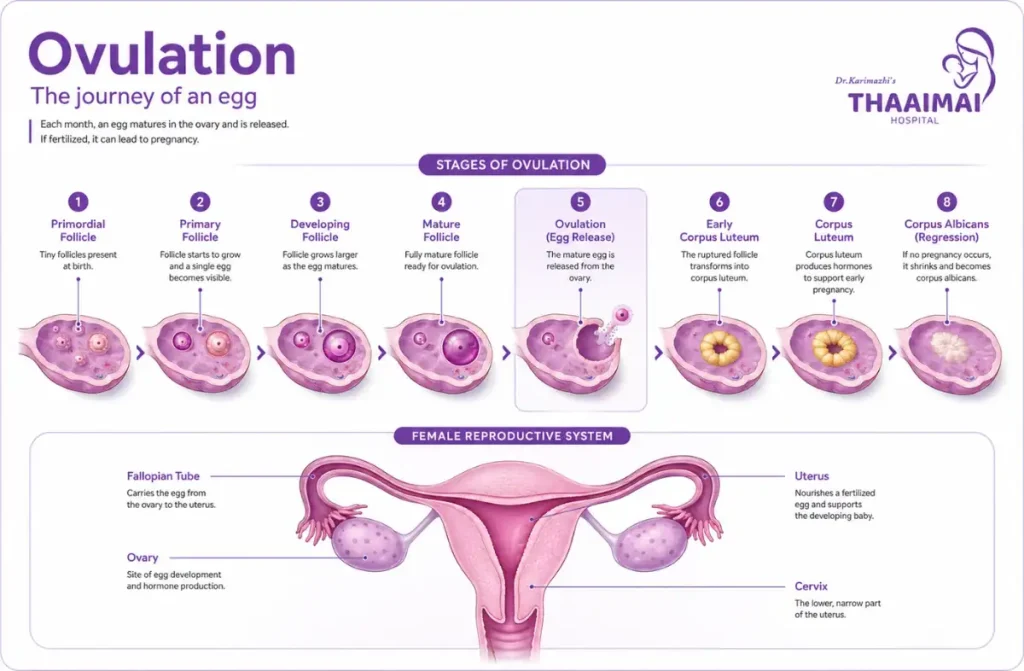
When the ovaries don’t release an egg every month, or release one irregularly, pregnancy becomes far less predictable. Blood tests around specific days of your cycle, combined with ultrasound tracking, tell us whether ovulation is happening at all. Many women are surprised to learn they haven’t been ovulating regularly for months.
Symptoms of PCOS (Polycystic Ovary Syndrome)
PCOS is one of the most common causes of irregular ovulation, and it often comes with a cluster of symptoms, such as:
- Acne or oily skin that doesn’t respond to usual treatment
- Excess hair growth on the face or body
- Gradual weight gain, especially around the abdomen
- Cycles longer than 35 days or missed periods
I see PCOS in a large share of my younger patients in Alwarpet, and the good news is that it responds well to lifestyle changes and, when needed, medication. With the right plan, most women with PCOS do go on to conceive.
Signs of Endometriosis Affecting Fertility
Endometriosis can cause deep pelvic pain, painful intercourse, and scar tissue that affects the fallopian tubes or ovaries. A laparoscopy is sometimes needed to confirm it, though we usually start with ultrasound and symptom history. Treating endometriosis early often protects fertility better than waiting.
History of Pelvic Infections or Surgeries
Past infections, including untreated sexually transmitted infections, or previous abdominal surgeries can leave scar tissue that blocks the fallopian tubes. If you’ve had a pelvic infection in the past, it’s worth mentioning during your first fertility visit, even if it happened years ago. A simple tube-patency test can confirm whether this is affecting your chances.
Repeated Pregnancy Loss or Miscarriage
Two or more miscarriages in a row is a pattern that deserves its own investigation, separate from difficulty conceiving in the first place. Causes can include uterine shape, hormonal issues, or clotting factors, and each needs a different test. I always reassure my patients that a diagnosis, even a difficult one, is the first step toward a solution.
What Causes Infertility in Women?
Ovulation Disorders
Ovulation disorders, often linked to PCOS or thyroid problems, are among the most common and most treatable causes of infertility I see. Medication that supports regular ovulation works for a large share of women within a few treatment cycles.
Fallopian Tube Blockage
Blocked or damaged fallopian tubes prevent the egg and sperm from meeting, usually as a result of past infection, endometriosis, or surgery. A dye test called an HSG lets us see the tubes clearly on X-ray. When blockage is confirmed, IVF often becomes the most direct path forward, since it bypasses the tubes altogether.
Uterine Problems Such as Fibroids or Polyps
Fibroids and polyps are growths in or around the uterus that can interfere with implantation, depending on their size and location. Not every fibroid needs treatment, but ones that distort the uterine cavity usually do. A hysteroscopy lets me both diagnose and often remove these in the same procedure.
Age-Related Decline in Fertility
Egg quality and quantity naturally decline with age, which is why, after 35, the signs of infertility in women are worth checking sooner rather than later. This isn’t about causing worry — it’s simply that fertility testing and treatment tend to work best when started with a bit more time on the calendar. I encourage every patient over 35 to come in after six months of trying, not twelve.
Hormonal and Thyroid Disorders
An underactive or overactive thyroid can disrupt ovulation just as much as a reproductive hormone imbalance can. A simple blood test tells us whether the thyroid is playing a role, and treatment is usually straightforward once identified.
When Should You Consult a Fertility Specialist?
- Under 35: trying for 12 months without success
- Over 35: trying for 6 months without success
- Known PCOS, endometriosis, or thyroid condition: any time you’re ready to start trying
Having Irregular Periods or Trying to Conceive for More Than 12 Months Without Success
If you’re under 35 and have been trying for 12 months, or your cycles have always been irregular, it’s time to come in for an evaluation rather than wait longer. Twelve months isn’t a rigid rule — it’s simply the point where testing tends to find useful answers.
Seeking Help Earlier After Age 35
After 35, six months without a pregnancy is enough reason to see a specialist, since fertility naturally narrows the available window for treatment. Coming in earlier simply gives us more options to work with, not less time to worry.
Having Irregular Periods or Known Fertility Conditions
If you already know you have PCOS, endometriosis, or a thyroid condition, don’t wait for the six-to-twelve month mark at all — come in as soon as you’re ready to start trying. Managing the underlying condition alongside conception planning gives the best chance of success.
How Is Female Infertility Diagnosed?
Ovulation Assessment and Hormone Testing
We typically start with blood tests timed to specific days of your cycle to check hormone levels tied to ovulation, egg reserve, and thyroid function. These results, combined with your period history, usually tell us within one visit whether ovulation is happening normally.
Ultrasound Scan for Ovaries and Uterus
A transvaginal ultrasound lets us see the ovaries, count developing follicles, and check the uterus for fibroids or polyps. It’s a quick, painless scan that gives us a clear picture of your reproductive anatomy in about fifteen minutes.
Fallopian Tube Evaluation
An HSG or a saline sonogram checks whether the fallopian tubes are open, which matters because a blocked tube prevents fertilization from happening naturally. Most women describe mild cramping during the test, similar to period pain, and it’s over within minutes.
Fertility Health Assessment for Both Partners
Because roughly a third of fertility cases involve a male factor, I always recommend a semen analysis for the partner alongside the woman’s testing. Looking at both partners together, rather than one at a time, saves months of guesswork.
Treatment Options for Female Infertility
Lifestyle Changes and Fertility Support
Reaching a healthy weight, managing stress, and treating conditions like PCOS or thyroid imbalance can restore regular ovulation on their own in many cases. I’ve seen patients conceive naturally within months of making these changes, without needing medication at all.
Ovulation Induction and Medication
For women who aren’t ovulating regularly, medication can encourage the ovaries to release an egg on a predictable schedule. We monitor response closely with ultrasound to time intercourse or insemination for the best chance of success.
IUI Treatment for Suitable Cases
Intrauterine insemination places prepared sperm directly into the uterus around the time of ovulation, which helps when there’s mild male-factor infertility or unexplained infertility. It’s a low-intervention option that many couples try before moving to more advanced treatment.
IVF Treatment for Advanced Fertility Support
When tubes are blocked, ovulation medication hasn’t worked, or age is a bigger factor, IVF offers the most direct path to pregnancy. At our center, we tailor the protocol to each woman’s hormone levels and egg reserve rather than using a one-size-fits-all approach.
Can Female Infertility Be Prevented?
Maintaining a Healthy Weight
Both being underweight and being significantly overweight can disrupt ovulation, so working toward a healthy, stable weight supports regular cycles. Small, sustainable changes in diet and activity tend to work better than drastic short-term fixes.
Tracking Menstrual Health and Ovulation
Knowing your normal cycle length and watching for changes gives you an early warning system for many fertility issues. A simple period-tracking app or calendar is often the first tool I recommend to new patients.
Managing PCOS and Hormonal Conditions Early
Treating PCOS or a thyroid disorder as soon as it’s diagnosed, rather than waiting until you’re ready to conceive, protects your fertility over the long run. Early management also tends to reduce other symptoms like acne and irregular weight gain.
Regular Fertility Check-Ups
An annual gynecological check-up, even before you’re planning a pregnancy, can catch conditions like fibroids or PCOS early. I recommend this to every woman in Alwarpet from her mid-20s onward, regardless of when she plans to start a family. For general reproductive health guidance, the World Health Organization’s infertility fact sheet is a reliable external resource.
Conclusion
Recognizing the signs of infertility in women early, rather than waiting for frustration to build, gives you and your doctor more options and more time to work with. At Thaaimai Hospital in Alwarpet, my goal is always to replace worry with clear answers and a plan you can trust. If any of what you’ve read here sounds familiar, I’d encourage you to book a consultation and take that first step.
— Dr. Kanimozhi, Fertility Specialist, Thaaimai Hospital, Alwarpet, Chennai